 Image 1 of 2
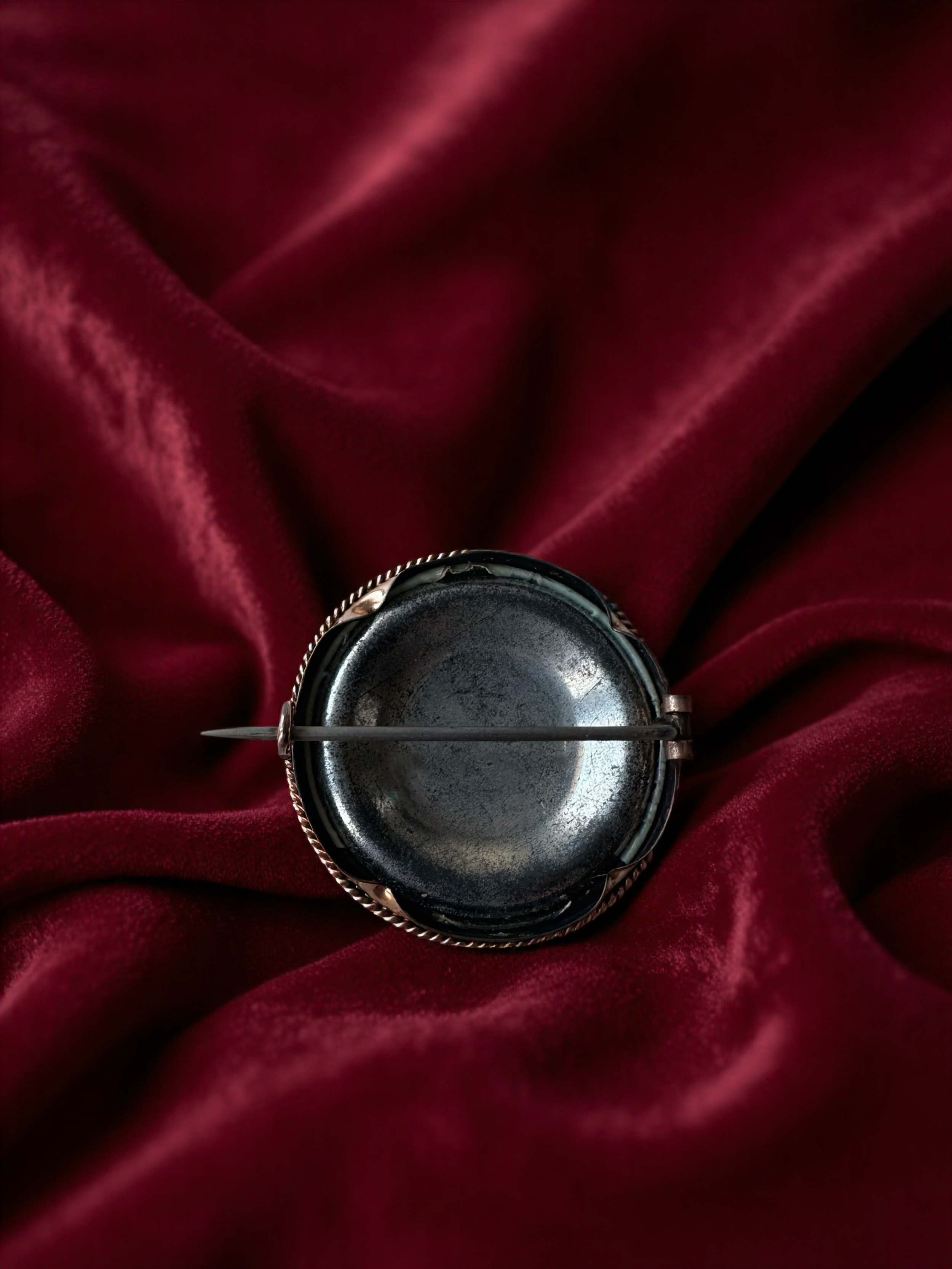 Image 2 of 2
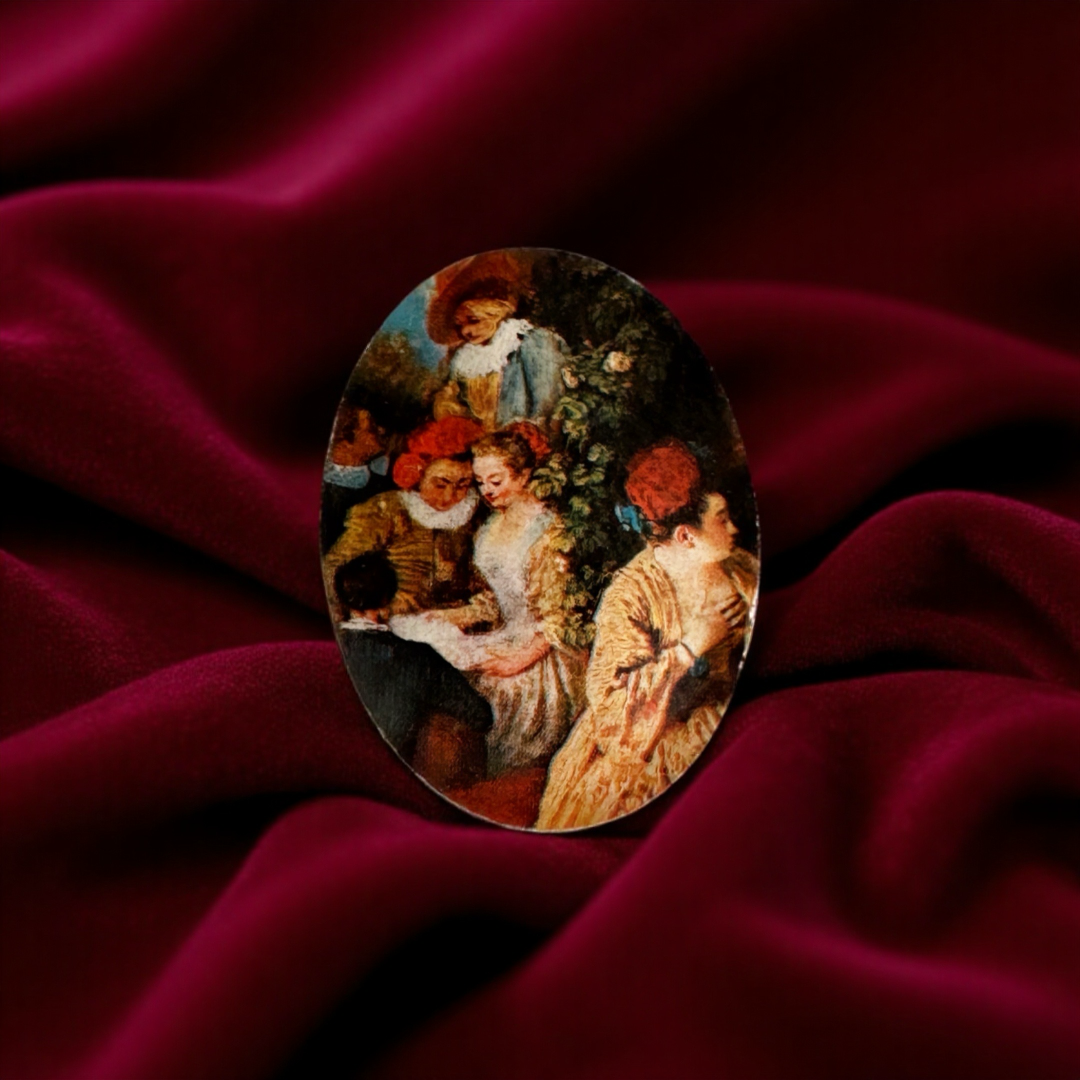
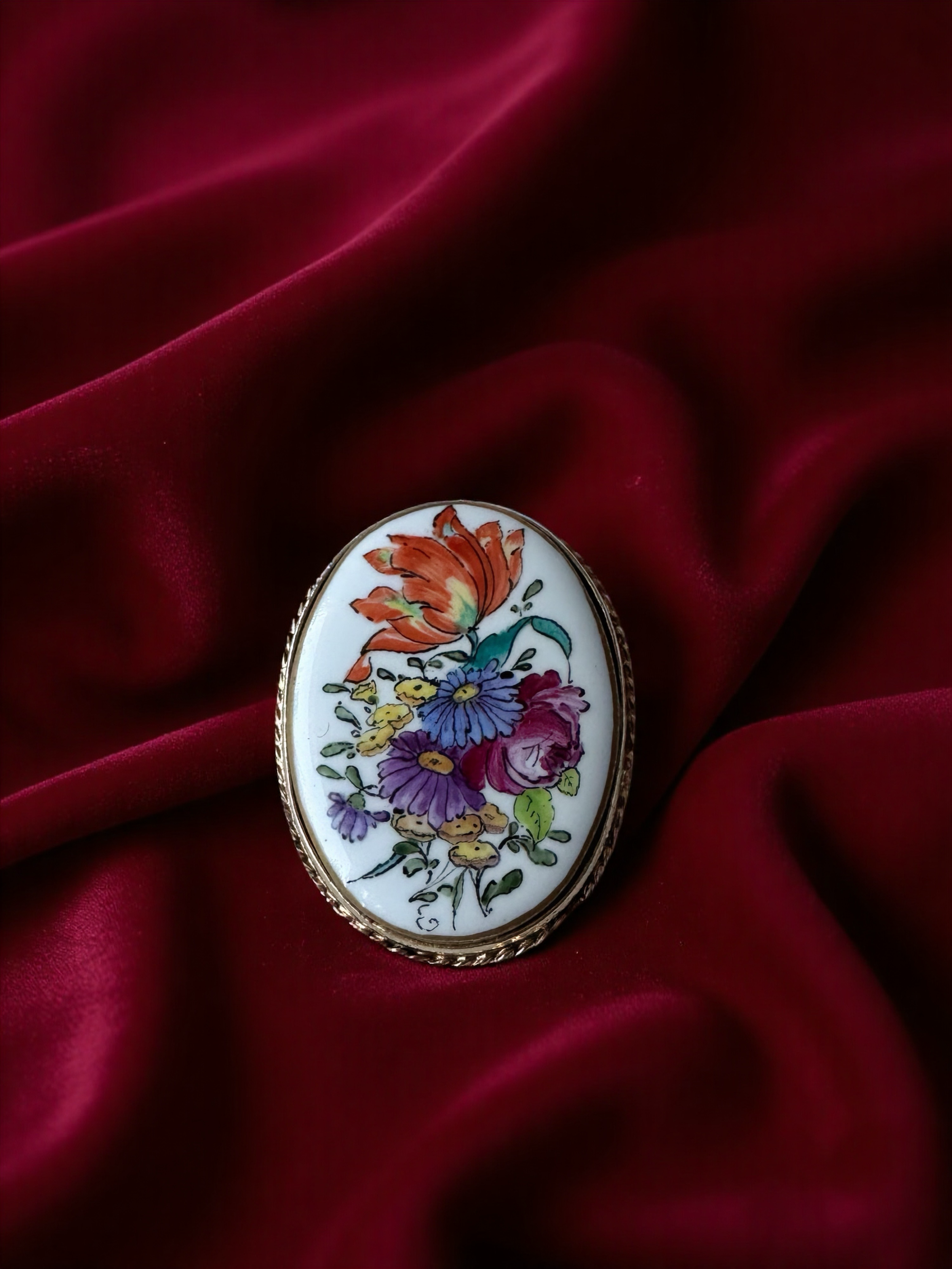
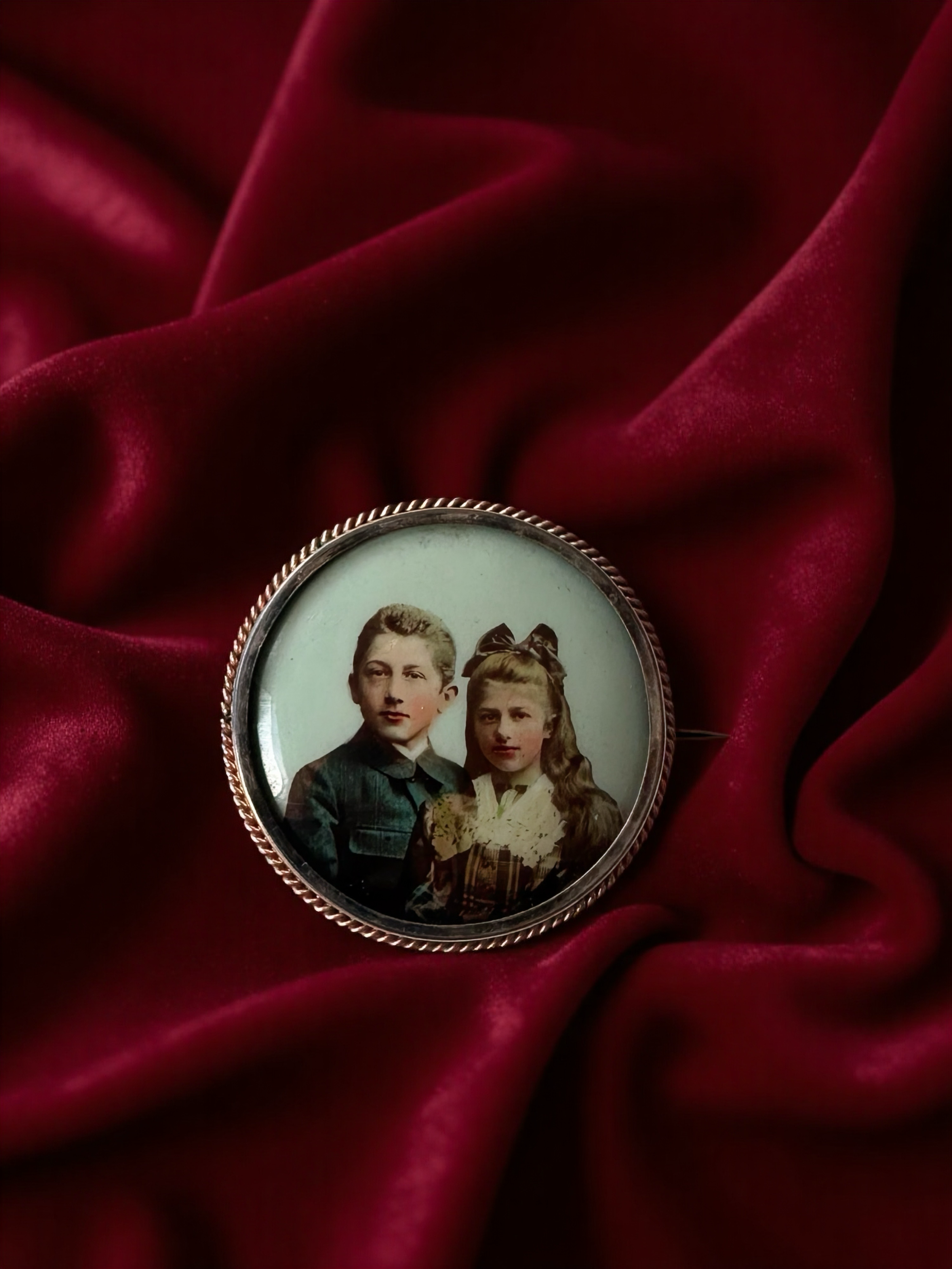
A poignant example of memorial jewelry, this antique mourning brooch commemorates the close bond between a brother and sister. Crafted in the subdued, respectful style typical of mourning pieces, the brooch features a framed portrait or hand-colored miniature of the two siblings set beneath glass and surrounded by gilt metal or darkened metalwork. The overall aesthetic emphasizes restraint and sentimentality rather than lavish decoration.
Central miniature: Likely a painted portrait or a printed photograph mounted within an oval bezel, protected by convex glass. The sitters are presented in plain, modest attire appropriate for mourning imagery.
Frame and bezel: Gilt metal, yellow metal, or base metal with a darkened patina. Some examples include engraved or stamped borders, subtle foliate motifs, or rope-edge detailing.
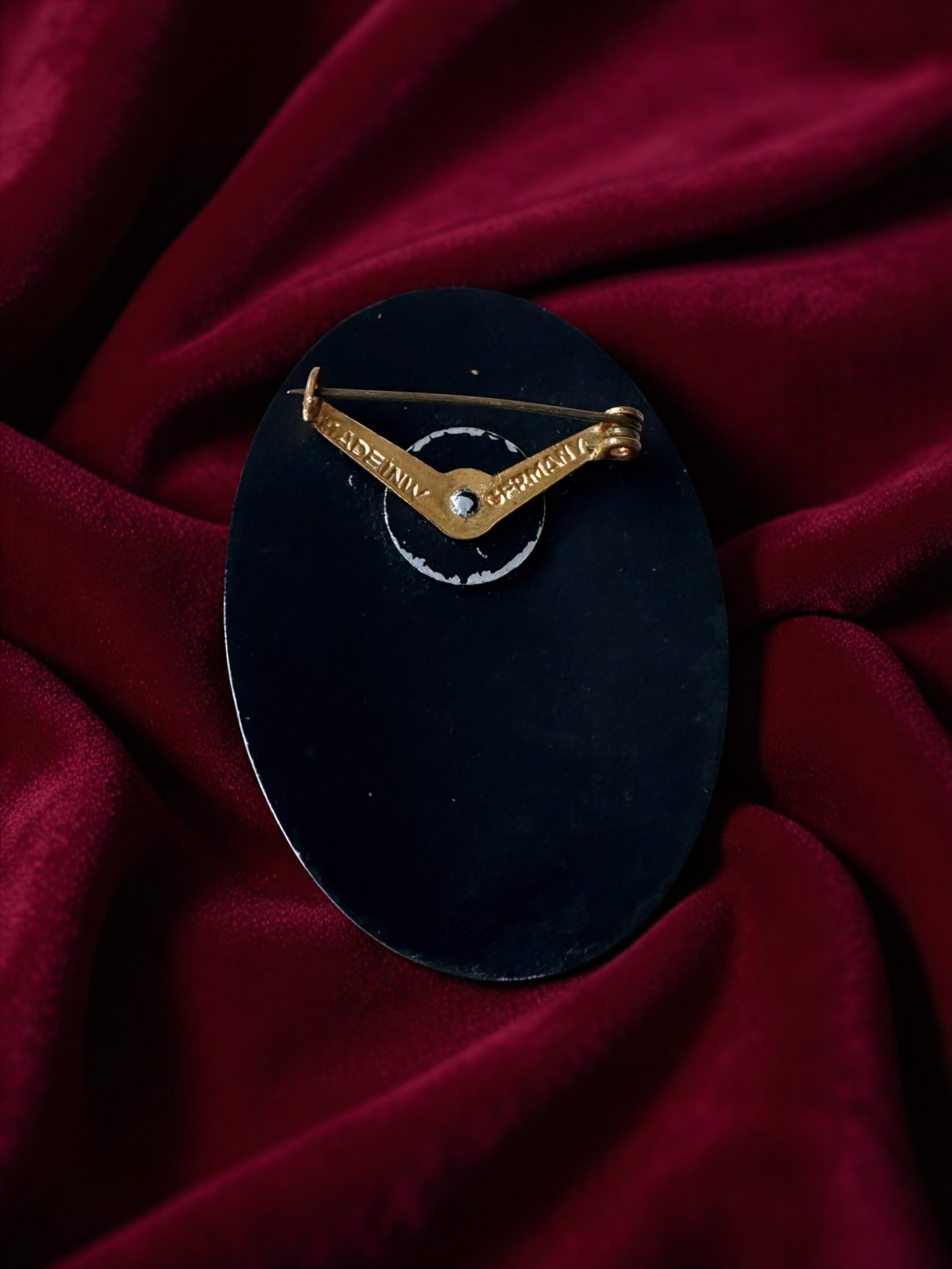
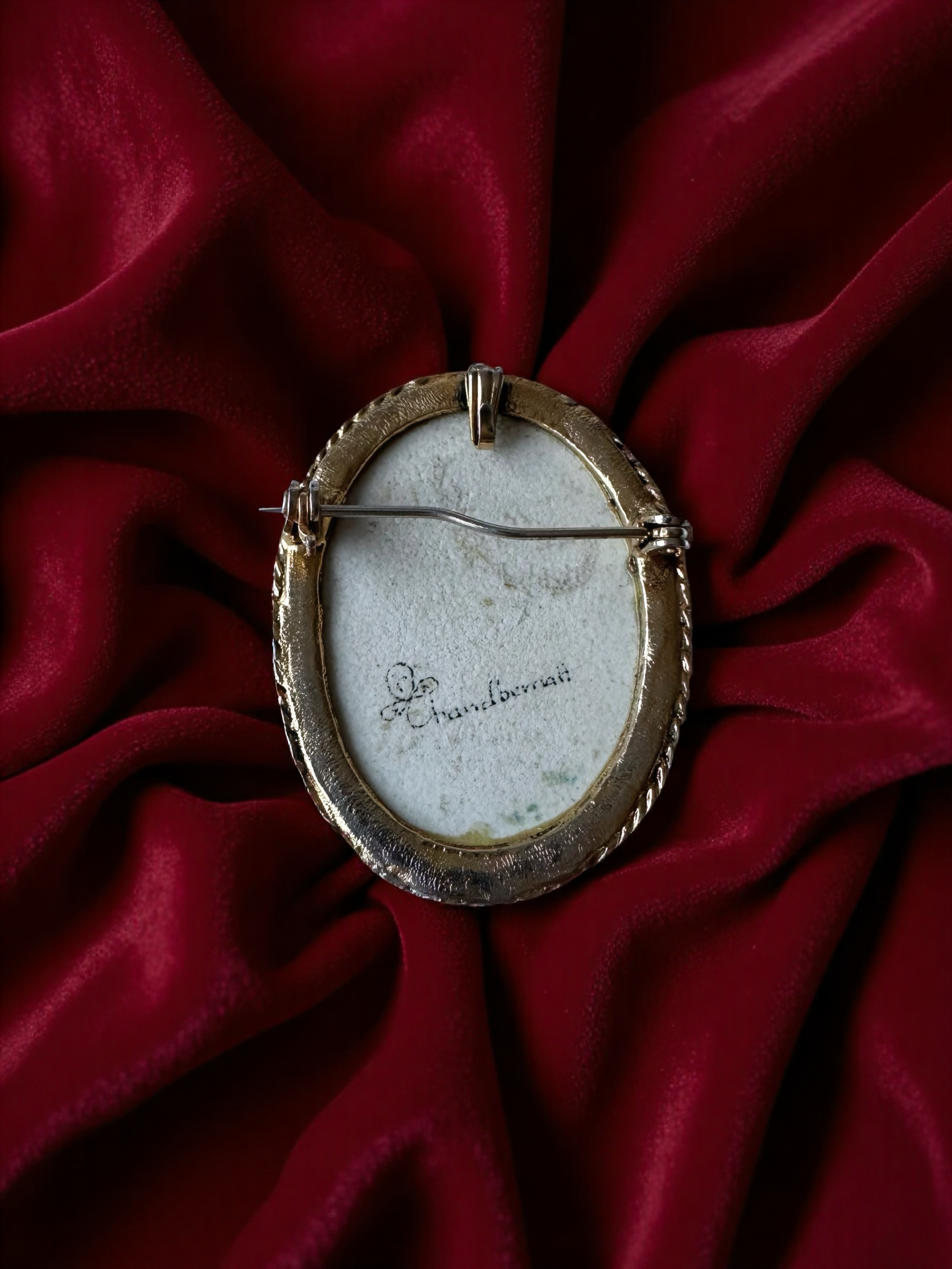
Back and fastening: Typical period pin and C-clasp or simple hinged pin; some may have a safety catch or a later replacement clasp.
Materials: Portrait miniature on ivory, card, or paper; glass cover; metal setting possibly gold-filled, gilt brass, or base metal. Some mourning brooches incorporate jet, black enamel, hairwork, or textile backing.
Size: Generally modest approximately 1 to 2 inches (25–50 mm) in height
Period: 1890-1915 ( from Victorian into Edwardian era)
Dating and period clues
Techniques: Painted miniatures on ivory and hand-tinted photographs point toward the 19th century. Photographic miniatures (daguerreotype, ambrotype, tintype, or small albumen prints) are more common from mid-to-late 1800s onward.
Fastening type: A C-clasp without safety catch suggests mid-19th century (c. 1840–1880). A trombone or roll-over safety clasp typically indicates a late-19th to early-20th-century date.
Materials and styling: Use of jet or black enamel and incorporation of hairwork are strong indicators of Victorian mourning practices (c. 1837–1901). Simpler gilt metal frames without heavy mourning ornamentation could be later, into the Edwardian era.
A poignant example of memorial jewelry, this antique mourning brooch commemorates the close bond between a brother and sister. Crafted in the subdued, respectful style typical of mourning pieces, the brooch features a framed portrait or hand-colored miniature of the two siblings set beneath glass and surrounded by gilt metal or darkened metalwork. The overall aesthetic emphasizes restraint and sentimentality rather than lavish decoration.
Central miniature: Likely a painted portrait or a printed photograph mounted within an oval bezel, protected by convex glass. The sitters are presented in plain, modest attire appropriate for mourning imagery.
Frame and bezel: Gilt metal, yellow metal, or base metal with a darkened patina. Some examples include engraved or stamped borders, subtle foliate motifs, or rope-edge detailing.
Back and fastening: Typical period pin and C-clasp or simple hinged pin; some may have a safety catch or a later replacement clasp.
Materials: Portrait miniature on ivory, card, or paper; glass cover; metal setting possibly gold-filled, gilt brass, or base metal. Some mourning brooches incorporate jet, black enamel, hairwork, or textile backing.
Size: Generally modest approximately 1 to 2 inches (25–50 mm) in height
Period: 1890-1915 ( from Victorian into Edwardian era)
Dating and period clues
Techniques: Painted miniatures on ivory and hand-tinted photographs point toward the 19th century. Photographic miniatures (daguerreotype, ambrotype, tintype, or small albumen prints) are more common from mid-to-late 1800s onward.
Fastening type: A C-clasp without safety catch suggests mid-19th century (c. 1840–1880). A trombone or roll-over safety clasp typically indicates a late-19th to early-20th-century date.
Materials and styling: Use of jet or black enamel and incorporation of hairwork are strong indicators of Victorian mourning practices (c. 1837–1901). Simpler gilt metal frames without heavy mourning ornamentation could be later, into the Edwardian era.